
Unmissable Luxury Experiences in Tunisia
April 22 2026
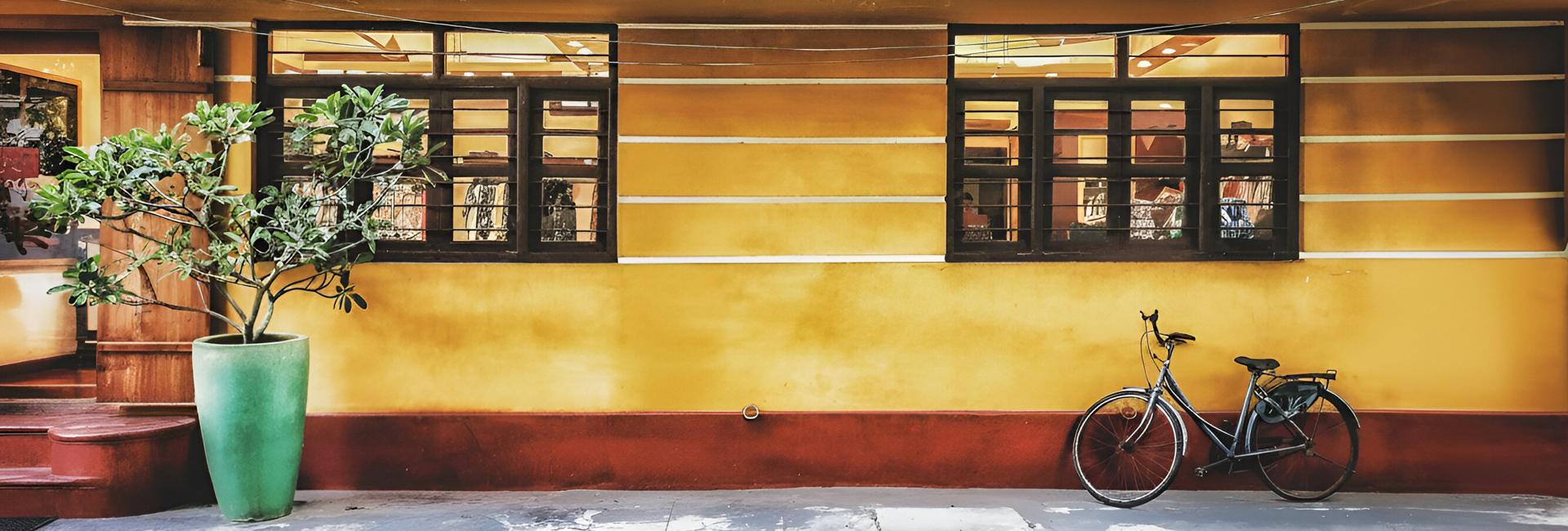
The first thing that struck me about Pondicherry was how instantly different it felt from anywhere else we had visited in India. Officially Puducherry, but more affectionately known as ‘Pondy’, the town had as many facets to its character as it had name variations.
On the French side of town, the atmosphere was sedate. Wide, tree-shaded boulevards ran past colonial villas with shuttered windows and whitewashed walls, adorned with cascades of colourful bougainvillaea. A salty breeze rolled in from the Bay of Bengal, where locals strolled the broad seafront promenade. The streets were quiet, interrupted only by the tinkle of bicycle bells as beret-wearing gentlemen pedalled leisurely past.
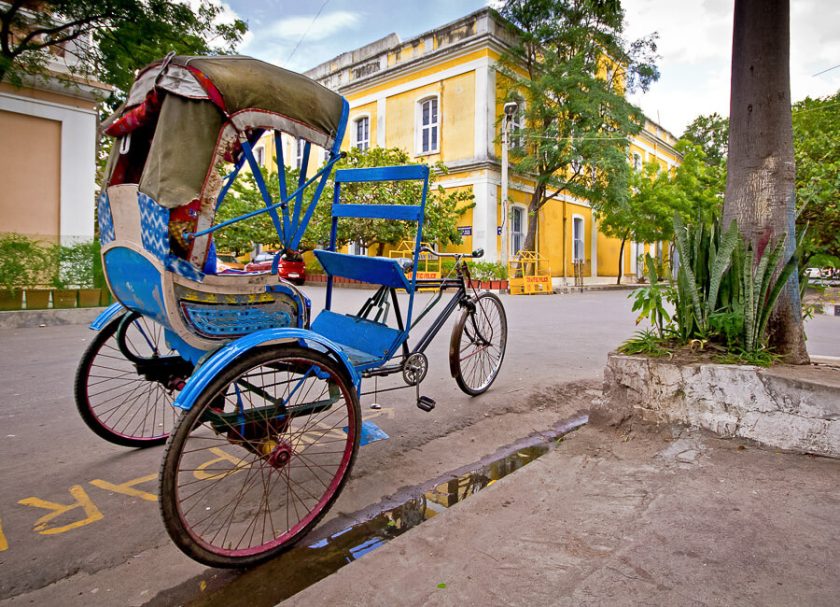
Cycle rickshaw in Pondicherry, India
Across the canal, however, Pondy shifted gears. The vibrant Tamil Quarter pulsed with life: scooters weaving between busy market stalls, temple bells chiming, women in bright saris threading garlands of jasmine, and the smell of incense smoke swirling into the sky. If the French Quarter was about grace and stillness, the Tamil side embodied India’s vibrancy in full.
Pondicherry’s history dates back to the 2nd century, and its colonial past is richly layered — the British, French, Danish, Portuguese, and Dutch all had an influence. Yet it is the French legacy that lingers strongest, and the state was under French rule until 1954. Navigating Pondy is easy – the town is divided from north to south by a canal with the ‘French’ part of town on the east side and the Tamil part to the west.
We stayed at Maison Perumal, a beautifully restored Tamil townhouse. Its high ceilings, carved pillars and leafy courtyard gave it a timeless charm. Sister property Palais de Mahe, with its mustard-coloured façade and rooftop restaurant, is an equally atmospheric base for exploring the French Quarter.
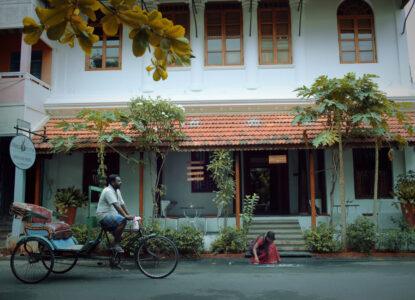
Maison Perumal Pondicherry
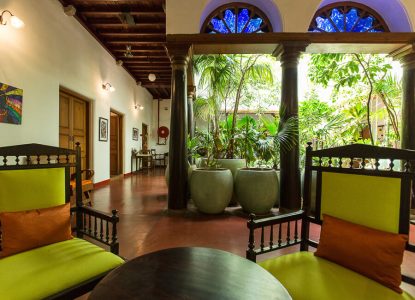
Maison Perumal Pondicherry
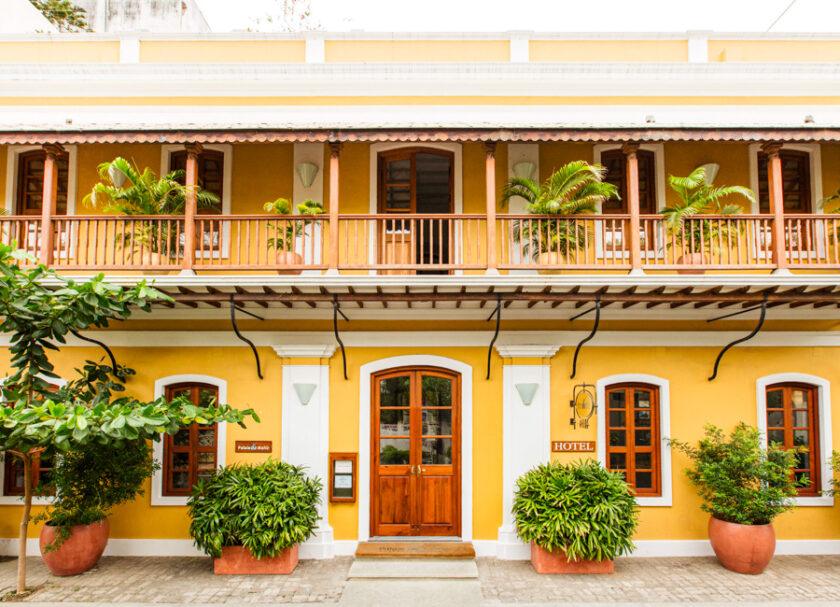
Palais de Mahe Pondicherry
Our favourite way to explore a destination is on foot, and a heritage walk through Pondicherry’s past and present allowed us to unravel the true essence of Pondy. We began on the Tamil side of town with a visit to the vibrant fish market, where vendors vied for attention by shouting to advertise their catch of the day. The air was thick with salt and the scent of spice. Stopping off at a couple of ornate, distinctly Tamil-style temples alive with colour, we also explored the unique style of architecture found here, in which houses are built wall-to-wall with a covered verandah extending across rooftops and inner courtyards, and almost to the street, giving the buildings a very uniform look.
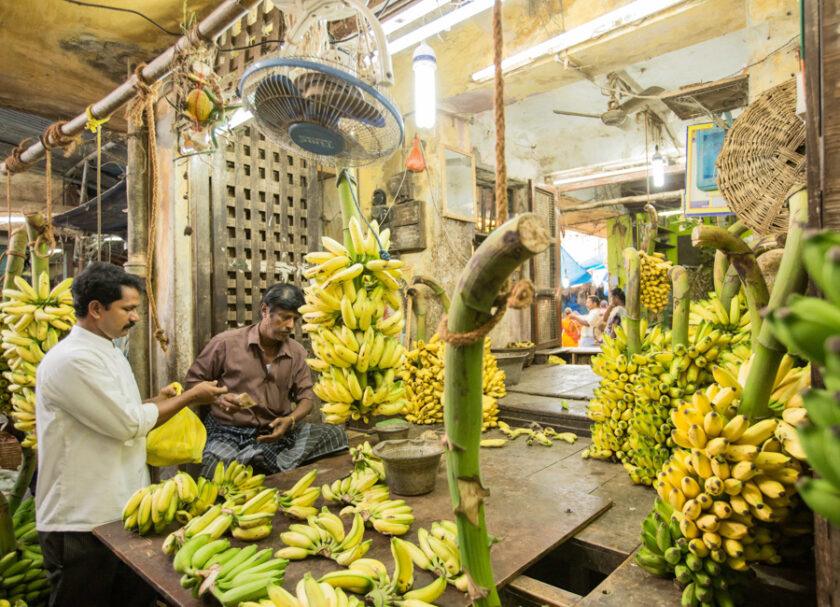
Pondicherry Market, South India
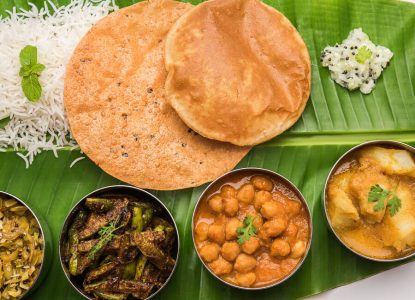
Traditional South Indian Banana Leaf Meal, India
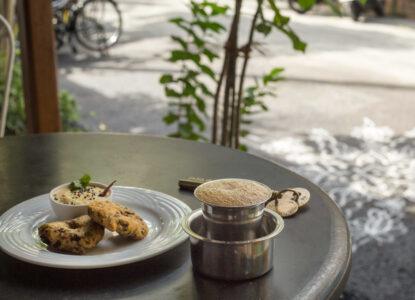
Pondicherry Cafe, India
From here, we strolled across the canal to the French part of Pondicherry and explored the streets. We lingered in art galleries and antique shops before giving in to the lure of a café where strong espresso was served beneath a faded colonial archway. Later, at a Tamil mess hall, banana leaves were spread before us, piled high with rice, sambar, and sweet chutneys. That evening, we indulged in the town’s French flair, tucking into buttery croissants from a patisserie and, later still, sipping a glass of Bordeaux as the Bay of Bengal darkened.
We dedicated the following day to exploring Tamil Nadu‘s famous ‘ashram town’. A short drive away lies Auroville, perhaps the world’s most famous ashram town. Founded in the 1960s as an experimental township, it remains a centre for meditation, learning and alternative living. A visit makes for an interesting day trip from the town, although guests are encouraged to stay a little longer. At its heart is the Matrimandir, a gleaming sphere that rises improbably from peaceful gardens and looks a little like a giant golden golf ball. We admired it from the viewing point before exploring the Visitor Centre, which offered an insight into Auroville’s bold, utopian dream.
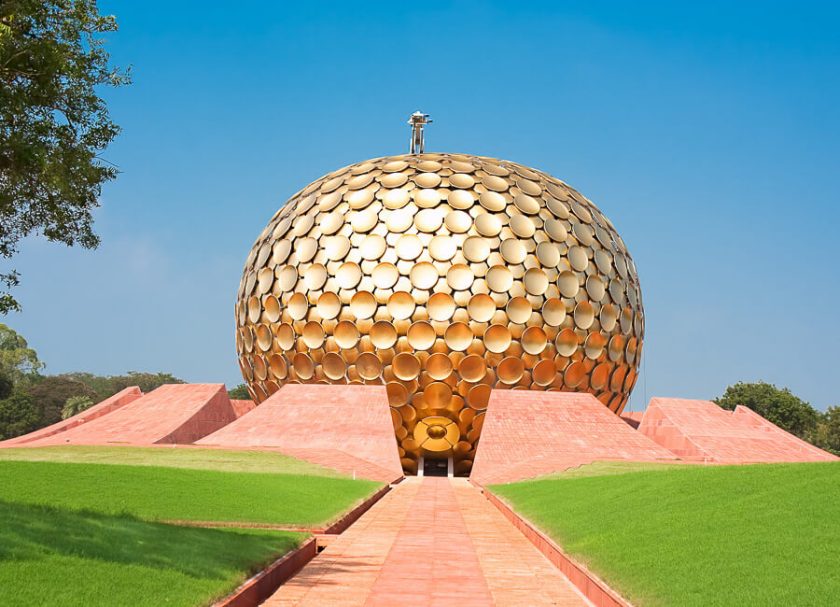
Auroville Meditation Hall, Pondicherry India
As evening fell, we returned to the promenade, where families and couples gathered to watch the waves crash in. We bartered for spicy sundal — roasted chickpeas served in newspaper cones — before drifting towards a waterfront café. As the first stars appeared above the Bay of Bengal and the streetlamps lit the curve of the esplanade, it struck me that Pondicherry is not about choosing between East and West, old and new, but about how seamlessly they coexist.
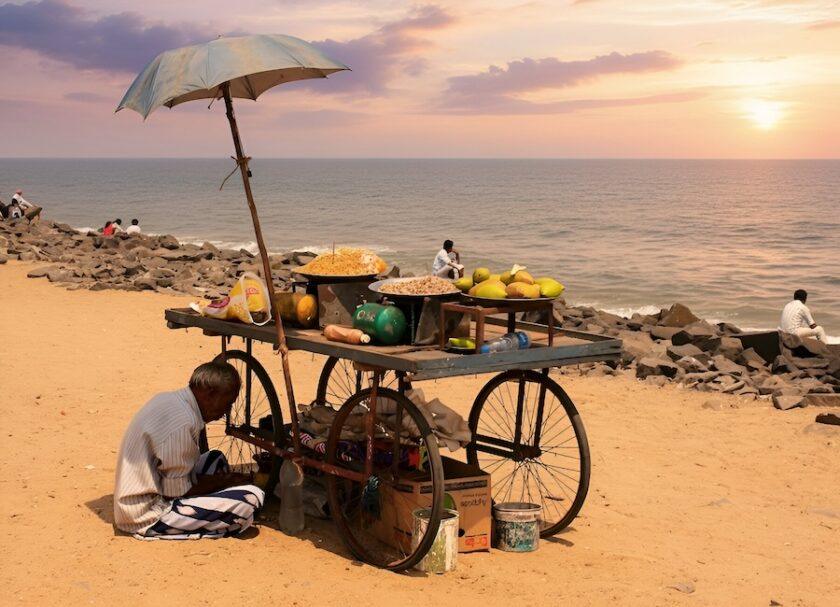
Pondicherry Beach, South India
Discover the many faces of Pondicherry on a tailor-made holiday to South India with Corinthian Travel. Whether you are drawn to colonial heritage, vibrant Tamil culture, or South India’s spiritual traditions, itineraries such as Passage through Coromandel & Malabar and Spiritual Tamil Nadu offer the perfect introduction. Contact our experts for further recommendations and to begin planning your holiday.
"*" indicates required fields
Guest post by Kirsty Bennetts. Full-time traveller and co-owner of the travel blog, Kathmandu & Beyond, Kirsty and her husband Mark spend much of their time exploring the Indian subcontinent.