Unmissable Luxury Experiences in Tunisia
April 22 2026
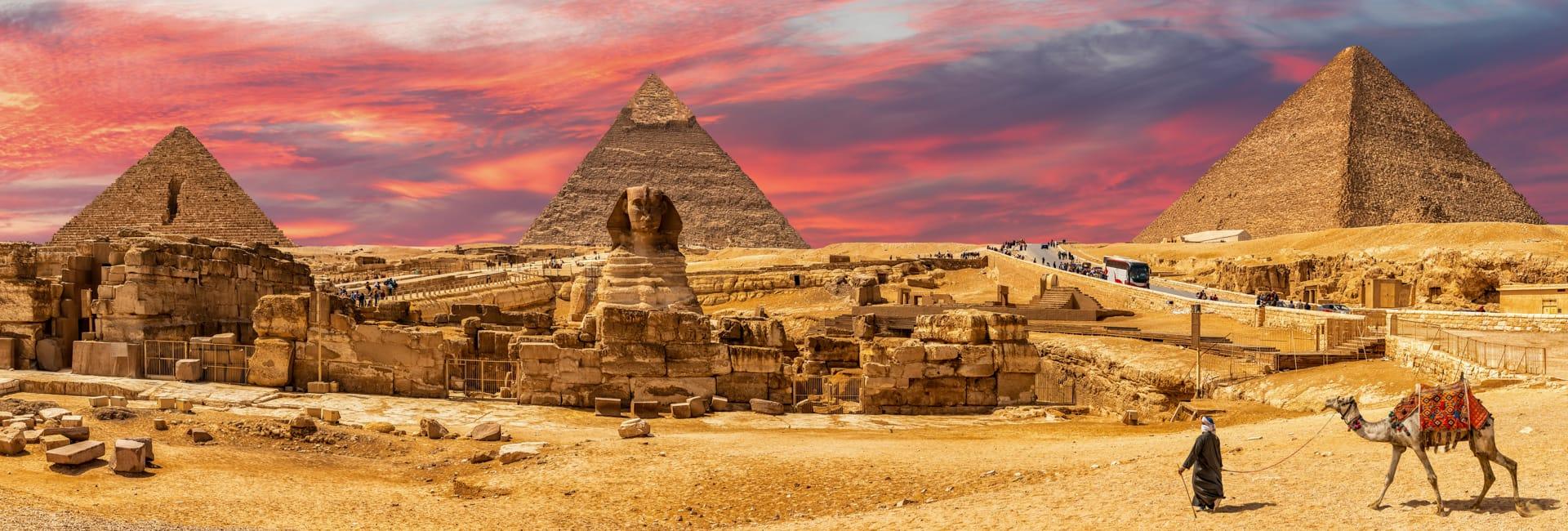
The Pyramids of Giza in Egypt are one of the world’s most iconic landmarks, drawing travellers from across the globe to marvel at their ancient grandeur. Visiting the Pyramids is a once-in-a-lifetime experience. In this guide, we’ll cover everything you need to know when planning a visit, including:
The Pyramids of Egypt are among the most visited tourist attractions in the world, drawing approximately three million visitors annually. While some may find the pyramids’ popularity reduces their fairy-tale charm, others may have their curiosity satisfied by the abundance of documentaries and fictional films. Regardless of how others perceive this World Wonder, the feeling of standing before the Pyramids of Giza—on the brink of exploring Egypt’s enigmatic past—remains unparalleled.
For us and many of our clients, the allure of the Pyramids never wanes. Beyond all the glamour, media attention, and tourism, these magnificent structures are truly awe-inspiring in every way. As one of the original wonders of the world, the Pyramids symbolise not only Egypt but also the remarkable achievements of human civilisation.
If you’re visiting the Pyramids for the first time, it’s crucial to be prepared. As many visitors will tell you, it’s better to have too much time to explore than too little and feel rushed during your first Egyptian Pyramids experience. Our comprehensive guide and travel tips aim to ensure you are well-informed ahead of an upcoming visit to Giza.
Visit The Pyramids of Giza with Corinthian Travel.

Great Pyramids at Giza, Cairo Egypt
Sources indicate that as many as 138 pyramid structures may be located throughout Egypt. However, the most famous of these are the Pyramids of Giza, particularly the Great Pyramid, which is the most well-known of the group. These monuments are the oldest of the Seven Wonders of the World, dating back to 2560 BC during the reign of Pharaoh Khufu, the second ruler of the Fourth Dynasty.
One early theory suggests that Pharaoh Khufu enslaved thousands of people to construct the Great Pyramid. Subsequent evidence indicates that many, if not all, of the workers were local Egyptians from nearby villages who worked under Khufu’s supervision. The true mystery of who built the pyramids and how they were constructed remains unsolved.
Pharaoh Khafre, Khufu’s son and successor, oversaw the construction of the Pyramid of Khafre and the famous Sphinx monument. Pharaoh Menkaure, the sixth ruler of this dynasty, began building his own pyramid, but upon his passing, his heir, Shepseskaf, completed the construction by 2490 BC.
Historians estimate that the Giza Pyramids took around 80 years to build, employing approximately 30,000 workers. Even before construction began, many individuals played vital roles in the design and planning of the pyramids. Astronomers and priests were consulted to determine the pyramids’ precise orientation. Copper tools were employed to shape the rock pieces, and ramps were constructed to lift the large stones into position.
To this day, some of the workers’ names can still be seen carved into the stones of the pyramids. Records indicate that the tradespeople took pride in their work and often referred to themselves with humour, adding inscriptions translating to “Friends of Khufu” and “Drunkards of Menkaure.”
These pyramids serve as tombs for the pharaohs who commissioned them, highlighting their connection to the afterlife. Despite extensive research, we still need to fully understand how they were built, who exactly built them, or their precise purpose. However, historians and archaeologists continue to explore these questions, and the enduring mystery certainly adds a sense of romance to the story of the Egyptian Pyramids.
Although Egypt is home to several clusters of ancient pyramids, most people imagine the Pyramids of Giza when they think of Egypt’s pyramids. In this post, we will cover these pyramids.
The iconic pyramids of Egypt are located on the outskirts of Cairo, on the Giza Plateau. They are located approximately 13 kilometres (8 miles) southwest of central Cairo, making them easily accessible for visitors staying in the city. Set on the west bank of the River Nile, Giza is an independent city, but it is so closely integrated with Cairo that it often feels like a suburb of the capital.
Cairo and Giza are in the Northern region of Egypt, just a few hours from Alexandria on the Mediterranean. Cairo airport is the hub for most international flights into Egypt and is also the gateway by air to Luxor, Aswan, and the archaeological wonders of Middle Egypt.
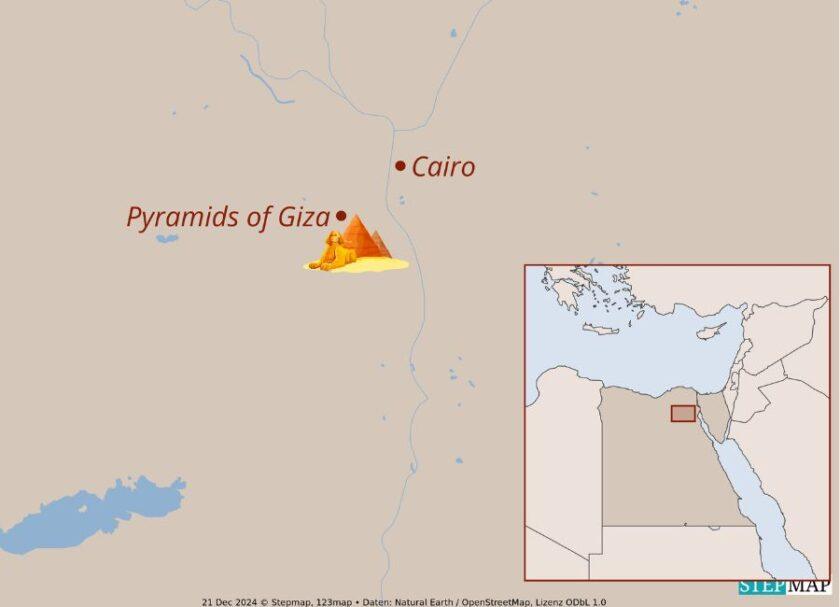
Location of the Pyramids in relation to Cairo
The Giza Plateau is vast, so exploring it thoroughly may require some planning. While walking is common, the distance between attractions, such as the pyramids and the Sphinx, often leads many visitors to choose alternatives. Options like camel rides, horse-drawn carriages, or guided tours are popular ways to get around.
The site is part of the Memphis Necropolis, a UNESCO World Heritage Site that includes several ancient Egyptian structures. Must-see highlights of the Giza Pyramid Complex are:

Pyramids at Giza, Cairo, Egypt
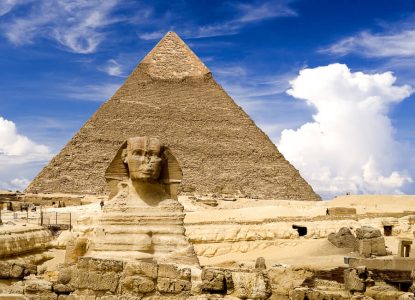
Great Sphinx of Giza and Pyramid of Kephren, Cairo Egypt
Yes, you can step inside the ancient marvels of Giza! Several pyramids are open to visitors, offering a once-in-a-lifetime chance to explore the interiors of these iconic structures. However, it’s important to understand what to expect so you can decide whether it’s worth the effort.
The Great Pyramid of Khufu is the most famous and awe-inspiring pyramid to explore. Inside, visitors can ascend the steep Grand Gallery to the stark yet mesmerising King’s Chamber, where the pharaoh’s sarcophagus once lay. Though slightly smaller, the Pyramid of Khafre offers a similar experience with its burial chamber and internal corridors, albeit less dramatic in design. For a quieter and more intimate exploration, the Pyramid of Menkaure provides a less crowded experience.
Inside the pyramids, you’ll encounter narrow, steep tunnels with low ceilings requiring stooping and some climbing that can be physically demanding. The burial chambers are typically empty, but their stark simplicity and the sheer scale of the stonework leave a powerful impression. Whether the experience is worth it depends on your expectations. While history and architecture enthusiasts may find standing in the burial chamber or navigating ancient corridors evocative, those anticipating elaborate decorations or opulent interiors may feel underwhelmed. The appeal lies in connecting with the craftsmanship and historical significance rather than visual grandeur.
Conditions inside the pyramids can be humid and claustrophobic, with limited ventilation and dim lighting, which may not suit everyone. Ultimately, venturing inside the pyramids provides a profound sense of stepping back in time, but the decision should depend on your interests, physical comfort, and expectations. Tickets to enter the pyramids are sold separately from general site entry, and the Great Pyramid, being the most iconic, is also the most expensive.
You can’t really spend too much time at the Pyramids of Giza. After all, this UNESCO World Heritage Site is one of the original Seven Wonders of the World, and the only one still standing today. Many visitors agree that the experience of visiting the pyramids differs significantly between daytime and nighttime.
The amount of time needed to visit the pyramids depends on how much you want to explore and your pace, and although it is possible to cover Giza’s highlights in half a day, as a general recommendation, plan to spend at least a full day at the site. This allows you the flexibility to view the pyramids in daylight and capture amazing photos at sunset. If you’re staying in Cairo or nearby, it’s wise to keep a day of your itinerary flexible so you have the option to return and explore more.
A typical visit to the Giza Plateau, including the Great Pyramid, Khafre’s Pyramid, Menkaure’s Pyramid, the Great Sphinx, and the surrounding complex, takes 3 to 4 hours. This timeframe allows you to see the main highlights, walk around the site, and, if desired, go inside one or two pyramids.
For those seeking a more in-depth experience, including visits to nearby attractions such as the Grand Egyptian Museum (GEM) or travelling to Saqqara and Dahshur to see additional pyramids, a full day is necessary. Arriving early in the morning is advisable to avoid crowds and the midday heat. Ultimately, plan for at least half a day for Giza itself, but if you’re passionate about Egyptian history and architecture, setting aside more time to include nearby sites will make your visit more rewarding.
The best time to visit the pyramids is dependent on both the season and the time of day. The most comfortable season to visit is during the cooler months from October to April when daytime temperatures range between 20–30°C (68–86°F). These mild conditions are ideal for walking around the vast Giza Plateau and climbing inside the pyramids without feeling overwhelmed by heat. During the hotter months of May to September, temperatures can soar above 40°C (104°F), making outdoor exploration uncomfortable, especially during midday. If you’re visiting in the summer, plan for an early morning or late afternoon visit to avoid the peak heat.
The time of day is equally important. The site is open from 8 AM to 4 PM year-round, although opening hours vary during Ramadan and public and national holidays. Visiting the pyramids early in the day is highly recommended, and arriving at opening time allows you to explore before the crowds and tour groups arrive. You’ll also enjoy cooler temperatures and softer lighting for photography. Late afternoons are another good option for fewer crowds and the chance to see the pyramids bathed in the golden hues of sunset, although you’ll need to manage your time carefully to ensure access to key sites before closing.
There can be multiple entrance fees to the pyramids at Giza, depending on what you want to see. Visiting the Giza Plateau itself requires a standard entry ticket, which allows you to explore the site, see the pyramids up close, and admire the Great Sphinx from outside. The General Entry ticket costs EGP 700 (approximately UK£10, US$ 14) for non-Egyptian adult visitors. If you wish to go inside any of the pyramids, you will need to purchase separate tickets for each one. The Great Pyramid of Khufu has the highest ticket price due to its iconic status (EGP 1500 (approximately UK£23, US$ 30). If you’re planning a broader exploration, separate tickets are required for other nearby attractions, such as the Solar Boat Museum. An additional ticket is also needed if you want to return after dark for the Sound & Light show.
We highly recommend booking a private guided tour. This all-inclusive option not only includes tickets to the parts of the complex you are interested in seeing but also provides expert insights, as well as saving you valuable time.
When planning a trip to the Pyramids of Giza, you’ll need to choose between staying in a hotel near the pyramids or downtown Cairo. Depending on your visit’s focus, both options have distinct advantages and drawbacks.
Staying in Giza
If your trip revolves around exploring the pyramids, staying in Giza offers unmatched convenience and stunning views. With the Grand Egyptian Museum now open nearby, there’s an even stronger case for choosing this location. If you want to stay near the pyramids, we recommend the Marriott Mena House Hotel, where you can wake up to a view of the pyramids.
Staying in Cairo
For travellers seeking a broader Egyptian experience, downtown Cairo provides easier access to the city’s vibrant life, restaurants, and cultural attractions. Accommodation options here are diverse, ranging from luxury hotels like St. Regis Cairo and Four Seasons Cairo at the Nile Plaza to charming boutique stays such as Le Riad Hotel De Charme and Villa Belle Époque. However, bear in mind that traffic between central Cairo and the pyramids can add a 45 to 60-minute commute, so early starts are advised to avoid the heat and crowds.
Making your Choice
If your main focus is the pyramids and you prefer quieter surroundings, Giza may be the best option. However, if you want to experience the lively atmosphere of Cairo while still being able to visit the pyramids, staying downtown offers a more diverse experience.

Pyramid view room, Marriott Mena House Hotel

St. Regis Cairo Hotel

Rooftop terrace, Le Riad Hotel De Charme Cairo

Swimming pool, Villa Belle Epoque Cairo
When visiting the pyramids, your clothing should be practical, comfortable, and suited to the desert environment and Egypt’s cultural norms. The right outfit will help you stay cool, protect you from the sun, and ensure you respect local customs.
Egypt’s climate is typically warm to hot, so lightweight, breathable fabrics such as cotton or linen are ideal. Summer temperatures can exceed 40°C (104°F), while winter months are cooler but still sunny. Loose-fitting clothing not only keeps you comfortable but also provides ventilation and protection from the intense sun.
Egypt is a predominantly Muslim country, and visitors should aim to dress modestly, especially in public areas. While the Giza Plateau is a tourist site and locals are accustomed to seeing a variety of outfits, it’s courteous to cover your shoulders and knees. Women may feel more comfortable wearing loose trousers, maxi dresses, or skirts paired with a light shawl or scarf. Men typically wear lightweight trousers or shorts that fall below the knee and short-sleeved shirts. Low-cut tops, tight clothing or see-through clothing should generally be avoided.
Suitable footwear is an important consideration. The site is extensive, and you will spend much of your day on your feet. The Giza Plateau is sandy, rocky, and uneven, so sturdy, closed-toe shoes such as trainers or hiking shoes are the best choice. Wearing sandals can leave your feet vulnerable to sand and dust, making them less suitable for walking around the site. A hat or scarf to protect your head and neck from the sun is essential, and sunglasses with UV protection are highly recommended. Additionally, remember to apply high-SPF sunscreen on any exposed skin.
Practical Tips
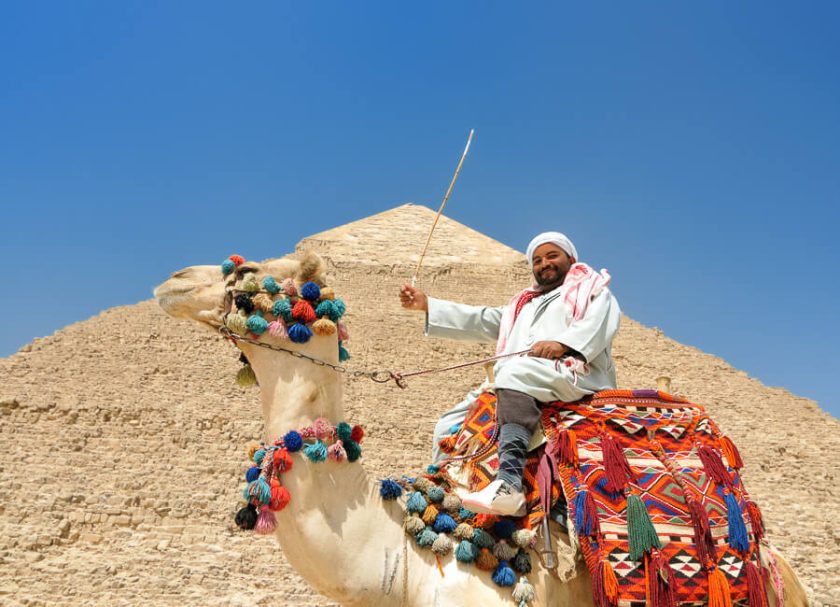
Pyramids at Giza, Cairo, Egypt
While the Pyramids of Giza are an incredible experience for most visitors, accessibility for people with limited mobility, young children, or other needs can be challenging due to the site’s uneven terrain and sandy paths. The area as a whole is not easy to access by wheelchair.
For those with mobility impairments, navigating the site may be difficult. Inside the pyramids, steep, narrow tunnels with low ceilings make entry physically demanding. While some areas near the pyramids and the Sphinx are accessible by vehicles such as golf carts or camels, these transportation options are not wheelchair-friendly. Pushchairs (strollers) are impractical due to the rocky and sandy paths, so baby carriers are better for families.
While the pyramids are not fully accessible to everyone, careful planning and the assistance of a tailored private tour can make this iconic experience more inclusive.
If you are staying in Cairo, there are several ways to get to Giza.
A visit to the Pyramids of Giza is an unforgettable experience. However, respecting the rules and local customs is essential to ensure the site is preserved for future generations.
Respecting the Site
The pyramids are part of a UNESCO World Heritage Site, and visitors should avoid touching, climbing, or defacing the ancient structures. Climbing on the pyramids is strictly prohibited and punishable by fines or legal action.
Photography Etiquette
Photography is generally allowed outdoors, but taking pictures inside the pyramids or in restricted areas might require special permission or an additional fee. Always check signage and follow guidelines to avoid issues. Drone use is not permitted without prior authorisation.
Interactions with Vendors
You’ll likely encounter vendors offering souvenirs or camel rides near the pyramids. Some can be quite persistent, so if you’re not interested, it’s best to politely decline. If you do want to purchase something or hire a service, such as a camel ride, agree on the price beforehand to prevent misunderstandings. Tipping for services is a common practice in Egypt.
Dress and Behaviour
Although the Giza Plateau is a major tourist site, visitors should dress modestly out of respect for Egyptian culture. Public displays of affection should also be avoided, as they may be frowned upon in conservative areas.
Littering and Preservation
Be mindful of littering—carry your rubbish with you or use the bins provided. Leaving the site clean helps preserve its beauty for other visitors.
General Conduct
Behave courteously and respectfully toward other visitors, local staff, and guides. Avoid loud or disruptive behaviour that might disturb others enjoying the site.

Great Pyramids at Giza, Cairo Egypt
Visiting the Pyramids of Giza is an incredible experience, but it’s important to be prepared for touts and potential scams. Vendors, guides, and camel ride operators are common near the site, and while many are legitimate, some can be pushy or overcharge unsuspecting tourists. Here are some practical tips to help you navigate these interactions smoothly.
One of the most empowering ways to avoid issues is to firmly but politely decline unwanted offers. A simple “no, thank you” or a gesture indicating disinterest can deter most touts. Be prepared for persistence and stand your ground without engaging further. If you’re interested in a service—such as a camel ride or guided tour—always agree on a clear price upfront, and don’t hesitate to confirm if the quoted price is in Egyptian pounds or another currency.
Be cautious of “free” offers, such as gifts or photographs with animals, as these often come with unexpected demands for payment afterwards. Similarly, watch out for individuals posing as official guides or staff who might lead you to restricted areas and then ask for a fee. Hiring a licensed guide or booking through a reputable tour operator is a reliable way to avoid these scams and enhance your visit.
At the entrance, you may also find camel owners and other unofficial guides trying to tell you that it is illegal to tour the pyramids without a guide (this is, of course, not true), or you may even come across people telling you that they need your business because they can’t feed their families. You will come across every kind of scam tactic, from trickery to sob stories.
It’s also helpful to carry small denominations of Egyptian pounds for tipping and small purchases and to avoid showing large amounts of cash. While bargaining is common in Egypt, keep negotiations lighthearted and respectful.
Whether you choose to explore independently or with the help of a guide, visiting the pyramids can be an inspiring experience. Each approach has its benefits, and the best option depends on your personal preferences and budget.
By booking a private guide in advance through a reputable tour operator, you are more likely to secure a licensed guide who can tailor the visit to your interests. A skilled guide can provide historical insights and help you fully appreciate the significance of these ancient wonders. Your guide will also handle logistics, navigate the site efficiently, and shield you from touts or potential scams, allowing you to focus on enjoying your experience.
Exploring the Pyramids of Giza is a truly memorable journey through time; for many, it is a once-in-a-lifetime experience.
For those seeking a luxurious adventure, Corinthian Travel offers bespoke Egypt holidays that include private tours with expert Egyptologists who can arrange insider access to the Pyramids and other historic sites. Speak to our experts to start planning your luxury holiday to Egypt today and immerse yourself in the wonders of the ancient world.
For more information or to enquire about our luxury Egypt holidays, contact Corinthian Travel today.